Leadership development that changes what people actually do.
Most leadership programmes are well designed and well received, and six months later the energy has dropped off and not much is different. The content was probably fine but what may have been missed was a design that connects what someone believes about themselves to how they show up for a different impact.
Cohort programmes, leadership and management development, and team coaching for organisations in financial services, insurance, engineering, FMCG and retail.
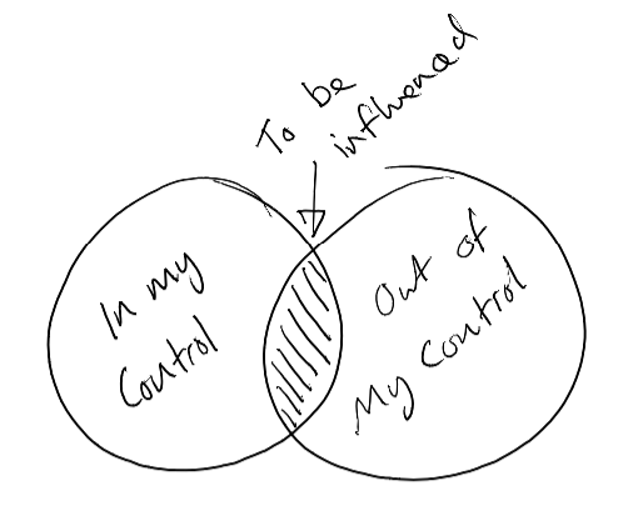
Change needs three things to line up.
The first is the quality of the design and the delivery. That’s on me, and I’ve built a career and a business out of doing it well. The second is the motivation of the individual. The third, and the one most often left to chance, is how prepared the business is to accept and support new behaviour once it appears. A programme can be excellent on the first two and still fail on the third, because people return to a system that rewards what they were doing before.
So when I design a programme I work with the sponsors and with the people who stand to gain most from the change. Not just to establish the content that needs building, but to understand the support required for the change to actually take hold.
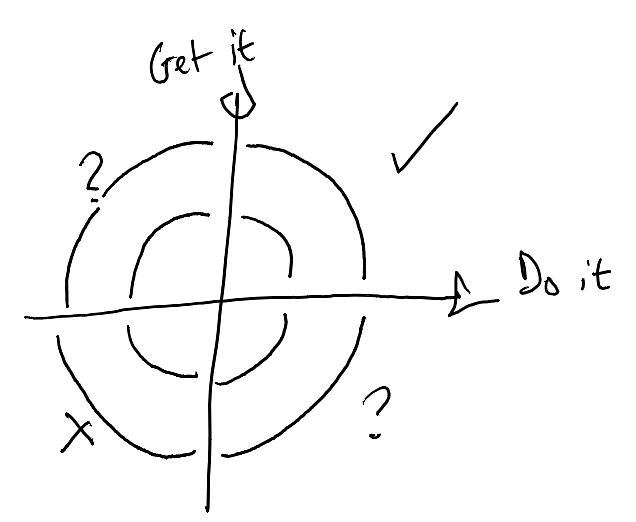
Underneath that, every programme works on three levels: the outcomes the business wants, the behaviours that have to shift to reach them, and the identity level that most programmes skip, which is what people believe they are allowed to do. Work only on behaviour and you get compliance that fades. Work on identity too and it sticks, because by then it belongs to the person rather than to the course.
What I build
Every organisation arrives with a different problem. These are the shapes the work usually takes:
Multi module programmes built around your context and your language, typically running six to nine months.
The layer where culture is actually transmitted, and often the layer with the least support.
For populations facing a restructure or a step up in scope, with psychometrics and/or 360 woven through rather than bolted on.
Facilitating conversations that cover more than the “what” of the team, but also the “why” and the “how”.
Hogan and MBTI where they earn their place. Individual debriefs plus anonymised group themes report for the sponsor where appropriate.
One to one work in parallel, for the people who need depth as well as breadth.
How a programme comes together
Diagnose. Conversations with sponsors and with the cohort, plus whatever data already exists, so the design starts from evidence rather than assumption.
Design. Built around your language. Where you already have leadership models or culture tools, those become the shared vocabulary rather than something new layered on top. Facilitator guides included, so if the material is to be handed over to the in house team, the content is not permanently dependent on me.
Deliver. Lots of energy, conversation, debate and practice. People rehearse the conversation they have been avoiding, with feedback, before they have it for real.
Embed. Work between sessions, line managers brought into the loop, and a closing event where people share what has changed rather than sit through a summary. Programmes are frequently rebought for a second cohort, which is the clearest signal I know that the first one worked.
Cohorts usually run at twelve to sixteen people; workshops are half or full days, three to four weeks apart, virtual or in person. I work alongside internal L&D rather than around them, and bring in associates I have delivered with for years where a programme needs more than one facilitator or coach.
MSc in Occupational Psychology from Birkbeck University of London; Accredited Member of the Association for Coaching, Hogan Advanced Practitioner, MBTI Steps I and II, BPS Level A and B. Currently completing an MA in Coaching at the University of Warwick.
What sponsors say

“What stood out for me wasn’t just the quality of the thinking, but the shift in mindset I’ve seen over the journey. People leaning into ambiguity, challenging constructively, and stepping up as leaders; not waiting for permission, but taking ownership.”